In short: Korean BBQ gives you more control than most restaurant meals, because you choose the cuts, cook them yourself and build each bite. The liver-friendly version leans on leaner cuts, seafood and mushrooms, lots of lettuce and perilla wraps, light use of dipping sauces, meat that is cooked through but not charred, and a plan for the alcohol before the first bottle arrives.
Last reviewed: November 2026
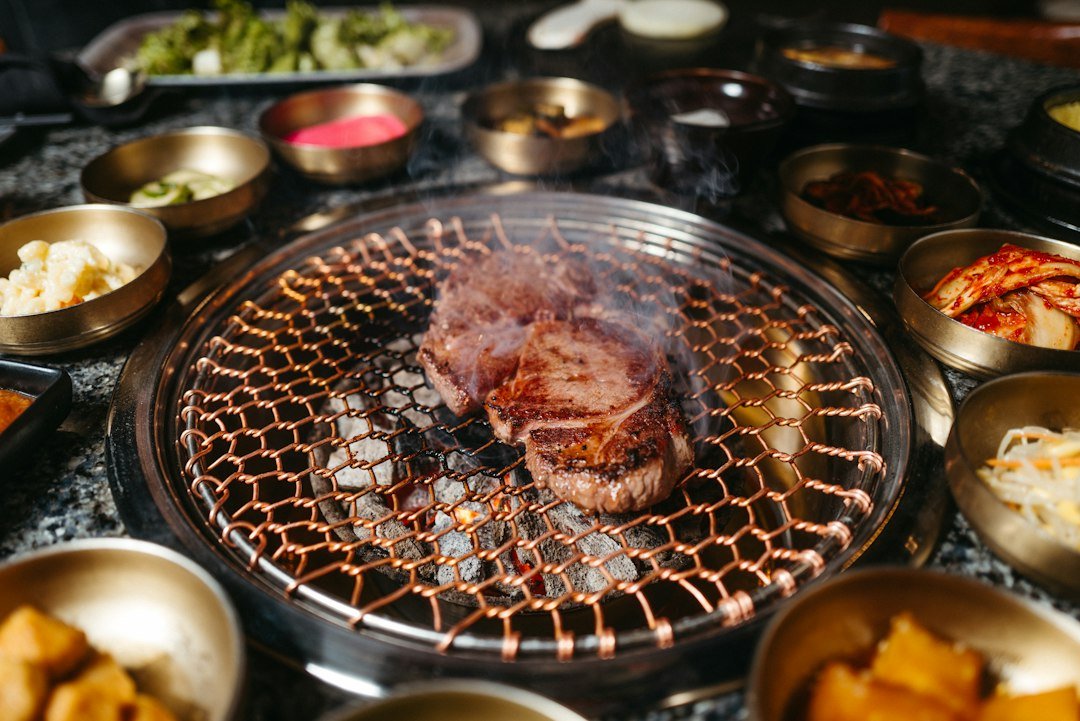
Why Korean BBQ can work in your favour
Most of the decisions that make a meal heavy happen in a restaurant kitchen you never see: how much oil, sugar and salt goes in. At a Korean BBQ table, many of those decisions are yours. The meal also comes with something most Western barbecues lack: a pile of fresh lettuce, perilla leaves, raw garlic, green chilli and vegetable banchan. Used well, that turns a meat-heavy meal into a much more balanced one.
1. Choose your cuts
From a cook’s point of view, the cuts on a Korean BBQ menu fall into three rough groups:
- Leaner choices: beef sirloin (deungsim) or other lean steak cuts, pork shoulder neck trimmed of excess fat (moksal), chicken (dak-galbi style, if not heavily sweetened), squid, prawns and fish, plus mushrooms such as king oyster and enoki.
- Fattier cuts to share in smaller amounts: pork belly (samgyeopsal), thin-sliced beef brisket (chadolbaegi) and marbled beef.
- Marinated meats: galbi and bulgogi marinades usually contain a fair amount of sugar, corn syrup or fruit purée, plus soy sauce. They are delicious, but treat them as the treat on the table rather than the main event.
A practical approach for a group: order one lean cut, one seafood or mushroom plate, and one fattier cut to share, instead of three plates of belly.
2. Grill it well, not burnt
When meat is cooked at high temperatures or in direct contact with a flame or hot metal, it forms chemicals called heterocyclic amines (HCAs) and polycyclic aromatic hydrocarbons (PAHs), which have caused DNA changes in laboratory studies. The World Health Organization’s cancer agency (IARC) classifies red meat as ‘probably carcinogenic’ and processed meat as ‘carcinogenic’, mainly for bowel cancer. It noted that high-temperature cooking produces more of these compounds, though there was not enough data to say how much cooking method changes the risk.
You do not need to give up barbecue, but these habits help:
- Turn meat often rather than leaving it on one side.
- Cut off charred or blackened bits instead of eating them.
- Ask for the grill plate to be changed when it is coated in burnt residue. Staff at Korean restaurants expect this.
- Cook thinner pieces that need less time over high heat.
- Grill vegetables and mushrooms too, so meat is not the only thing on the plate.
Always cook pork and chicken all the way through. Food safety still comes first.
3. Build a better bite
The ssam (wrap) is your best tool:
- Use a whole lettuce or perilla leaf for every piece of meat. Ask for refills; they are usually free.
- Add raw garlic, green chilli and the sliced spring onion salad (pa-muchim) for flavour without much salt.
- Go easy on ssamjang and the sesame oil and salt dip. Ssamjang is made from soybean and chilli pastes and is salty, so a small dab per wrap goes a long way.
- Eat the vegetable banchan, such as bean sprouts, spinach and radish, between bites. Kimchi is salty, so a few pieces rather than a bowlful.
4. The rice and noodles at the end
Many people finish with a bowl of rice and doenjang-jjigae, or cold naengmyeon noodles. After a full meal of meat, this is a lot of extra refined starch and salt. Options:
- Share one naengmyeon between two or three people instead of one each.
- Have doenjang-jjigae with plenty of the tofu and vegetables and less of the broth, and a half serve of rice.
- Or skip the carbohydrate course if you are already full. It is a habit, not a requirement.
5. Plan the drinks before they arrive
Alcohol is often the biggest liver issue at a Korean BBQ dinner. One green bottle of soju is about 4.5 to 5 Australian standard drinks, more than the 4-drink daily limit in Australia’s alcohol guidelines, and somaek adds up faster than it looks. Decide on your limit first, keep a water glass going, and keep your glass partly full so it does not get topped up. The full maths is in How Many Standard Drinks Are in a Bottle of Soju?
Sweet soft drinks and fruit soju add sugar on top. Barley tea or sparkling water work well with grilled meat.
6. Watch out for budae-jjigae
Army stew (budae-jjigae) is built around ham, sausages and Spam, which are processed meats, plus instant noodles and a salty broth. It is a fun dish to share once in a while, but it is not the liver-friendly choice on the menu.
A sample order for four people
- 1 plate of lean beef or pork neck
- 1 plate of seafood (squid or prawns) or a mushroom platter
- 1 plate of pork belly to share
- Extra lettuce and perilla leaves
- 1 doenjang-jjigae and 2 bowls of rice for the table
- Water and barley tea on the table; soju with a set limit for those who drink
The bottom line
Korean BBQ can be a reasonably balanced meal if you lean on leaner cuts and vegetables, wrap every bite in lettuce, avoid charred bits, keep the sauces light, and set your alcohol limit before you start.
This article is general information, not medical or dietary advice. See our Medical Disclaimer and Editorial Policy.
Sources
- International Agency for Research on Cancer. Q&A on the carcinogenicity of the consumption of red meat and processed meat. 2015.
- US National Cancer Institute. Chemicals in meat cooked at high temperatures and cancer risk.
- National Health and Medical Research Council. Australian guidelines to reduce health risks from drinking alcohol. 2020.