In short: A liver function test is a group of blood markers, not a single score. ALT and AST show whether liver cells are being irritated, GGT is often raised by alcohol and fatty liver, and other markers show how well the liver is working. Results inside the ‘normal’ range do not rule out fatty liver, because lab reference ranges were set in populations that included many people with undiagnosed fatty liver. To check for scarring, doctors now use a simple calculation called FIB-4. Your GP is the right person to interpret your results.
Last reviewed: November 2026
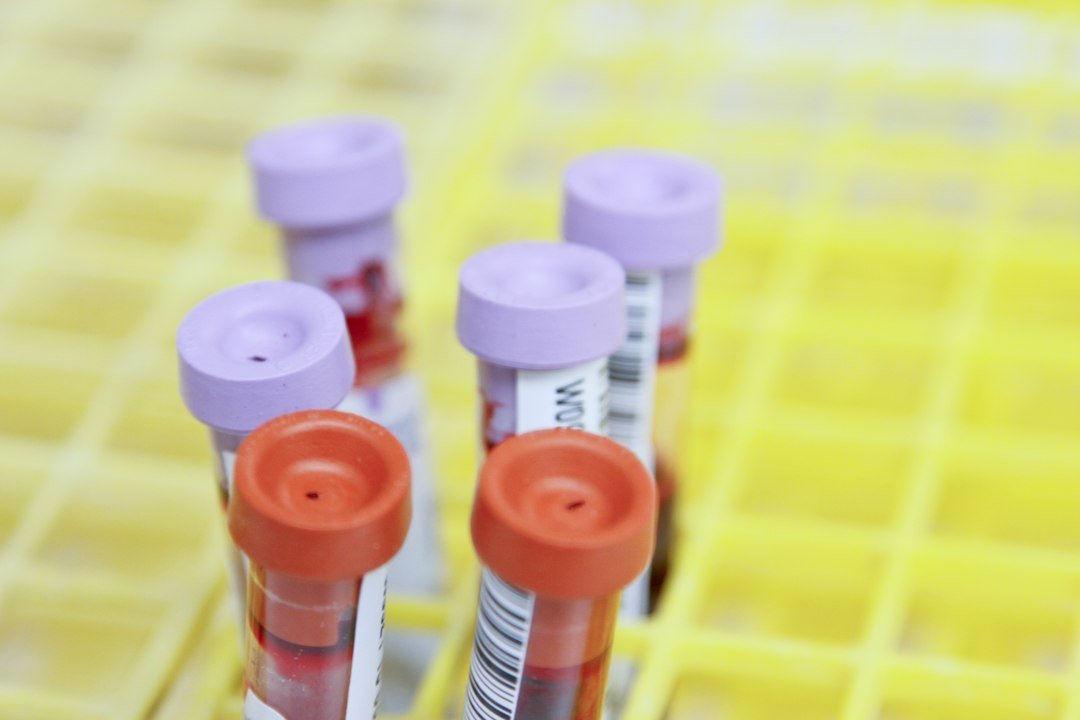
What is on a liver function test?
In Australia, a ‘LFT’ usually reports several markers together:
| Marker | What it mainly reflects | Worth knowing |
|---|---|---|
| ALT (alanine aminotransferase) | Liver cell irritation or damage | The most liver-specific of the enzymes. Fatty liver is the most common cause of a raised ALT. |
| AST (aspartate aminotransferase) | Liver cell damage, but also muscle | Can rise after hard exercise or muscle injury. Used in the FIB-4 score. |
| GGT (gamma-glutamyl transferase) | Liver and bile ducts | Often raised by regular drinking, fatty liver and some medicines. |
| ALP (alkaline phosphatase) | Bile ducts and bone | Can be higher in growing teenagers, pregnancy and some bone conditions. |
| Bilirubin | How well the liver clears a yellow pigment from old red blood cells | A mild isolated rise is common and often harmless (Gilbert’s syndrome), but needs a doctor’s assessment. |
| Albumin | A protein the liver makes | Low levels can reflect reduced liver function, but also poor nutrition or other illness. |
Why ‘normal’ is not always normal
Each laboratory sets its own reference range. For ALT, upper limits used by different labs have been reported to range from about 31 to 72 U/L. Those ranges were usually based on large groups of apparently healthy people, which inevitably included many with undiagnosed fatty liver.
When researchers built reference ranges only from people with no liver risk factors, the upper limits came out much lower. A well-known Italian study of blood donors proposed about 30 U/L for men and 19 U/L for women, and studies in Japanese and Chinese populations have reached similar figures. A large study of South Korean adults with ultrasound-diagnosed fatty liver concluded that a normal ALT does not guarantee the absence of liver disease.
In practice, that means:
- A result flagged as normal does not prove your liver is free of fat.
- An ALT drifting upwards over several tests, even within range, can be worth discussing with your doctor.
- Fatty liver is usually diagnosed by combining blood tests with imaging, such as an ultrasound, and your risk factors.
Things that can push results up temporarily
- Hard exercise, especially weight training, in the days before the test (mainly AST).
- Alcohol in the days or weeks before (especially GGT).
- Some medicines and supplements. Tell your doctor about everything you take, including herbal products.
- A recent viral illness.
That is why doctors often repeat a mildly abnormal result rather than acting on one test.
FIB-4: checking for scarring
The most important question with fatty liver is not how much fat there is, but whether scarring (fibrosis) has developed. Scarring is what drives the risk of cirrhosis and liver cancer.
Liver guidelines now recommend a simple first step called the Fibrosis-4 index (FIB-4). It uses four numbers that are often already on your blood test results:
FIB-4 = (age × AST) ÷ (platelet count × √ALT)
Typical cut-offs used for fatty liver are:
- Below 1.3 (below 2.0 if you are 65 or older): low risk of advanced scarring. Usually managed in general practice, with the test repeated every few years and attention to metabolic risk factors.
- 1.3 to 2.67: indeterminate. A second test is recommended, such as a FibroScan (a painless ultrasound-based scan that measures liver stiffness) or a specialised blood test.
- Above 2.67: higher risk. Referral to a liver specialist is usually recommended.
FIB-4 has limits. It is less reliable in people under 35, the higher cut-off is needed for older adults because age is part of the formula, and conditions such as acute hepatitis or heavy recent drinking can distort it. Different cut-offs are used for viral hepatitis. It is a triage tool for your doctor, not a diagnosis.
What to ask your GP
- ‘Are my liver results normal for someone with my risk factors, not just within the lab range?’
- ‘Has my FIB-4 score been calculated? Do I need a FibroScan?’
- ‘Have I been tested for hepatitis B and C?’ This matters especially for people born in Asia. See Hepatitis B and Korean Australians.
- ‘When should we repeat these tests?’
The bottom line
Liver blood tests are useful, but a single result inside the normal range does not prove a healthy liver, and a slightly high result is not automatically serious. If you have risk factors for fatty liver, such as extra weight around the waist, diabetes, high blood pressure or abnormal cholesterol, ask your GP about a FIB-4 score. It is a free calculation from tests you may already have had. Read more in What Is MASLD?
This article is general information, not medical advice, and cannot be used to interpret your own results. See our Medical Disclaimer and Editorial Policy.
Sources
- European Association for the Study of the Liver, EASD, EASO. EASL–EASD–EASO Clinical Practice Guidelines on the management of MASLD. Journal of Hepatology. 2024.
- Rinella ME, et al. AASLD Practice Guidance on the clinical assessment and management of nonalcoholic fatty liver disease. Hepatology. 2023.
- FIB-4 calculator and guidance for health professionals. liver.org.au.
- Utility of ALT concentration in men and women with nonalcoholic fatty liver disease: cohort study. Journal of Clinical Medicine. 2019;8(4):445.
- Prati D, et al. Updated definitions of healthy ranges for serum alanine aminotransferase levels. Annals of Internal Medicine. 2002;137(1):1–10.