In short: Korean soups and stews get most of their saltiness from doenjang, gochujang, soy sauce, salt and salted seafood, and most of that salt ends up in the broth. You can keep the flavour and use less of all of them by starting with a proper anchovy and kelp stock, seasoning late, using acidity, heat and aromatics, bulking out the pot with vegetables and tofu, and eating more of the solids than the broth.
Last reviewed: November 2026
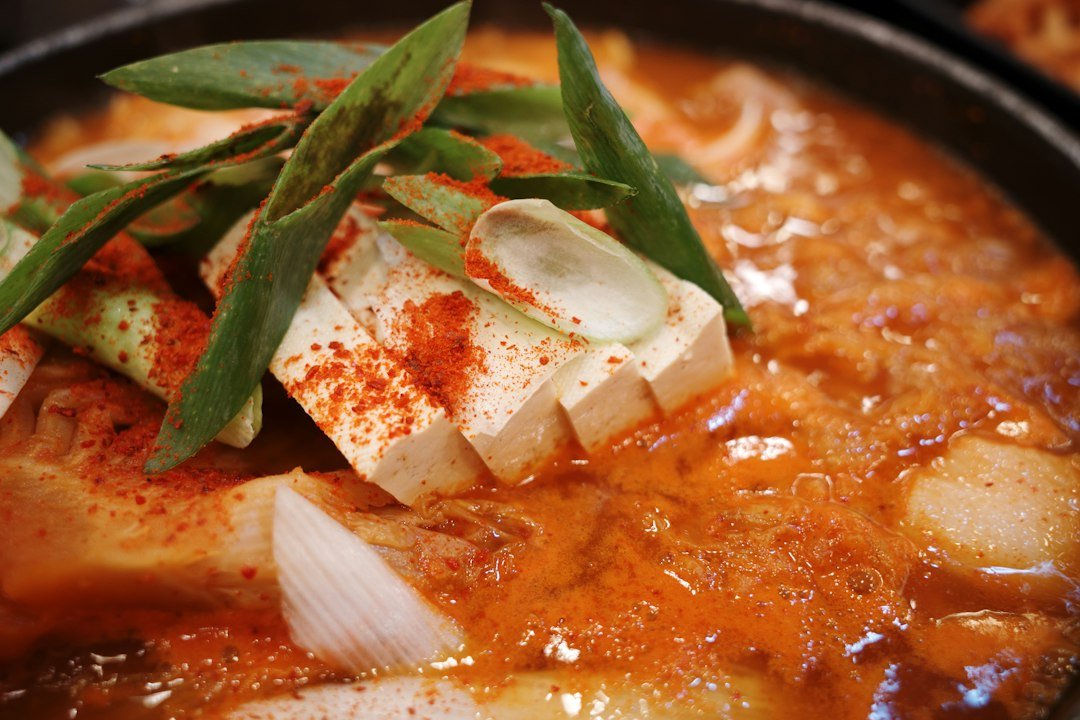
Why soups and stews matter
A Korean meal almost always includes a guk (soup), jjigae (stew) or tang (long-simmered soup). They are comforting and full of vegetables, but they are also where much of the meal’s salt sits. Australian and World Health Organization advice is to keep sodium to around 2,000 mg a day for most adults, which is about 5 g of salt, a little under a teaspoon. A generous bowl of jjigae plus kimchi and rice can use up a large share of that in one meal.
Salt does not cause fatty liver directly, but high blood pressure is one of the five metabolic risk factors that define it, and salt is a major driver of blood pressure. See What Is MASLD?
The good news is that most of the satisfying flavour in a good jjigae does not come from salt at all. It comes from stock, fermentation, heat, aroma and texture. Professional cooks lean on those, and so can you.
1. Start with a real stock, not water
This is the single biggest change. Dried anchovies (myeolchi) and dried kelp (dasima) simmered together make a stock with deep savoury flavour, so the pot needs far less paste or soy sauce to taste right.
- Pull the heads and dark guts off the anchovies to avoid bitterness, and toast them briefly in a dry pot.
- Add water and a piece of kelp, bring to a simmer and remove the kelp after about 10 minutes, before it turns slimy.
- Simmer the anchovies another 10–15 minutes, then strain.
- Dried shiitake mushrooms, the white part of spring onions and a piece of daikon all add extra depth.
Make a big batch and freeze it in containers, so weeknight jjigae starts from stock without extra effort.
2. Measure the paste, then hold some back
Most people season doenjang-jjigae by eye, and the eye usually overshoots. Measure the doenjang or gochujang with a spoon, start with about two-thirds of what you would normally use, and only add more at the end if it truly needs it. Different brands vary a lot in saltiness, so a recipe amount that works with one brand can be too salty with another. Compare sodium per 100 g on the label, as explained in our Korean pantry guide.
3. Season at the end, not the start
A stew reduces as it simmers, which concentrates the salt. If you season fully at the start, it will be saltier by the time it reaches the table. Add most of the paste early for flavour, but leave the final adjustment with soy sauce or salt until the last minute, after tasting.
4. Use acidity to brighten
A small splash of rice vinegar, or a squeeze of lemon in clear soups, makes food taste more seasoned without adding salt. Well-fermented, sour kimchi does the same job in kimchi-jjigae, which is why older kimchi makes better stew. Add acid a little at a time so it brightens rather than turns the soup sour.
5. Let heat and aromatics do the work
- Gochugaru (chilli flakes) adds heat and colour with no salt.
- Garlic, ginger and spring onion make the broth taste fuller. Add some garlic early and a little more right at the end for a fresh hit.
- Black pepper and a few drops of toasted sesame or perilla oil at the end add aroma that our brains read as flavour.
- Cheongyang chillies or other fresh green chillies give a sharp kick that makes a less salty stew taste lively.
6. Fill the pot with vegetables and tofu
The more vegetables and tofu in the pot, the less broth each bowl holds, and the less seasoning you need per serve. Zucchini, onion, potato, mushrooms, daikon, bean sprouts, cabbage and tofu all soak up flavour. As a cook’s rule of thumb, aim for a stew that is thick with ingredients rather than a soup with a few pieces floating in it.
7. Go easy on salted seafood and processed extras
Salted shrimp (saeujeot), fish sauce, ham, Spam and instant stock powders add a lot of sodium quickly. If a dish needs them for character, use a small amount and reduce the other seasonings to compensate. For budae-jjigae style dishes, swap processed meats for fresh pork, chicken or extra tofu.
8. Eat the solids, leave some broth
Because most of the salt is dissolved in the liquid, eating the vegetables, tofu and meat and leaving some broth in the bowl is a simple way to take in less sodium without changing the recipe at all. Serving stews in smaller individual bowls rather than eating straight from the shared pot helps too.
9. Balance the rest of the table
If the stew is the salty centre of the meal, keep the side dishes lighter: plain or lightly seasoned namul, fresh vegetables, a small dish of kimchi rather than several salted banchan, and a bowl of mixed-grain rice. Drink water or barley tea rather than soft drinks.
Retraining your palate
Taste for salt adapts. If you cut back gradually, for example by using a little less paste each week, most people stop noticing the difference within a few weeks, and the old version starts to taste too salty. Cutting everything at once is more likely to leave you unsatisfied and reaching for the soy sauce.
The bottom line
You do not need to give up jjigae to eat less salt. Start with anchovy and kelp stock, measure and hold back the paste, season at the end, add acidity, heat and aromatics, pack the pot with vegetables and tofu, and leave some broth in the bowl.
This article is general cooking and health information, not medical or dietary advice. If you have been told to follow a low-sodium diet for a medical condition, follow the advice of your doctor or an Accredited Practising Dietitian. See our Medical Disclaimer and Editorial Policy.
Sources
- Food Standards Australia New Zealand. How much sodium should I eat?
- Food Standards Australia New Zealand. Sodium levels in a range of packaged and take-away foods.
- Rinella ME, et al. A multi-society Delphi consensus statement on new fatty liver disease nomenclature. Journal of Hepatology. 2023.