In short: Sugar in drinks is one of the easiest things to cut for liver health. In a randomised trial, healthy young men who drank about 80 g of table sugar or fructose a day in sweetened drinks (roughly 800 mL of regular soft drink) for seven weeks doubled the amount of fat their liver made, even though their total calorie intake did not rise. Glucose alone did not have this effect. The World Health Organization recommends keeping free sugars below 10% of daily energy, and ideally below about 25 g a day.
Last reviewed: November 2026
How the liver turns sugar into fat
Table sugar (sucrose) is made of two smaller sugars joined together: glucose and fructose. Most cells in the body can use glucose directly. Fructose is different: it is processed mainly in the liver. When the liver receives more fructose than it needs, it can convert some of it into fat through a process called de novo lipogenesis, literally ‘making new fat’. Some of that fat is sent into the blood as triglycerides, and some stays in the liver.
Drinks deliver sugar quickly and in large amounts, without the fibre and chewing that slow down eating. They also do not make you feel full, so their calories tend to be added on top of your meals rather than replacing them.
What the Zurich trial showed
Researchers at the University of Zurich and University Hospital Zurich ran a double-blind randomised trial with 94 healthy young men, published in the Journal of Hepatology in 2021. For seven weeks, participants drank beverages sweetened with fructose, sucrose or glucose, providing about 80 g of sugar a day on top of their usual diet. A control group avoided sugary drinks.
Using tracer techniques, the team measured how much new fat the liver was producing. The results:
- Fructose and sucrose drinks roughly doubled the liver’s fat production compared with the control group.
- Sucrose, ordinary table sugar, increased it slightly more than pure fructose.
- Glucose drinks did not change fat production.
- The effect was still present more than 12 hours after the last sugary drink or meal.
- Participants did not eat more calories overall, so the effect was not simply due to overeating.
The study was short and involved only healthy young men, so it does not prove that sugary drinks alone cause fatty liver. But increased fat production in the liver is considered an early step on the path to fatty liver and type 2 diabetes, and the amount of sugar involved was not extreme.
How much sugar is too much?
The WHO’s sugar guideline recommends that adults keep free sugars below 10% of total energy intake, and suggests that going below 5% (about 25 g, or six teaspoons, a day for an average adult) brings extra benefits. Free sugars include sugar added by manufacturers or cooks, plus the sugars in honey, syrups and fruit juice. They do not include sugar naturally present in whole fruit, vegetables or plain milk.
A single can of regular soft drink can contain up to 40 g of free sugars, which is above the ideal daily limit on its own.
Fatty liver guidelines generally advise cutting sugar-sweetened drinks as part of a healthier eating pattern. Read more in What Is MASLD?
Korean drinks to watch
Soft drinks are the obvious ones, but many sweet drinks in Korean food culture are easy to overlook because they feel traditional or healthy:
- Fruit-syrup teas such as yuja-cha (citron tea), maesil-cheong (green plum syrup) and omija drinks. The fruit is preserved in roughly equal weights of sugar, so a generous spoonful in hot water is mostly sugar.
- Sikhye (sweet rice punch). Canned versions are usually sweetened further.
- Coffee mix and sweet café drinks. See Is Coffee Good for Your Liver?
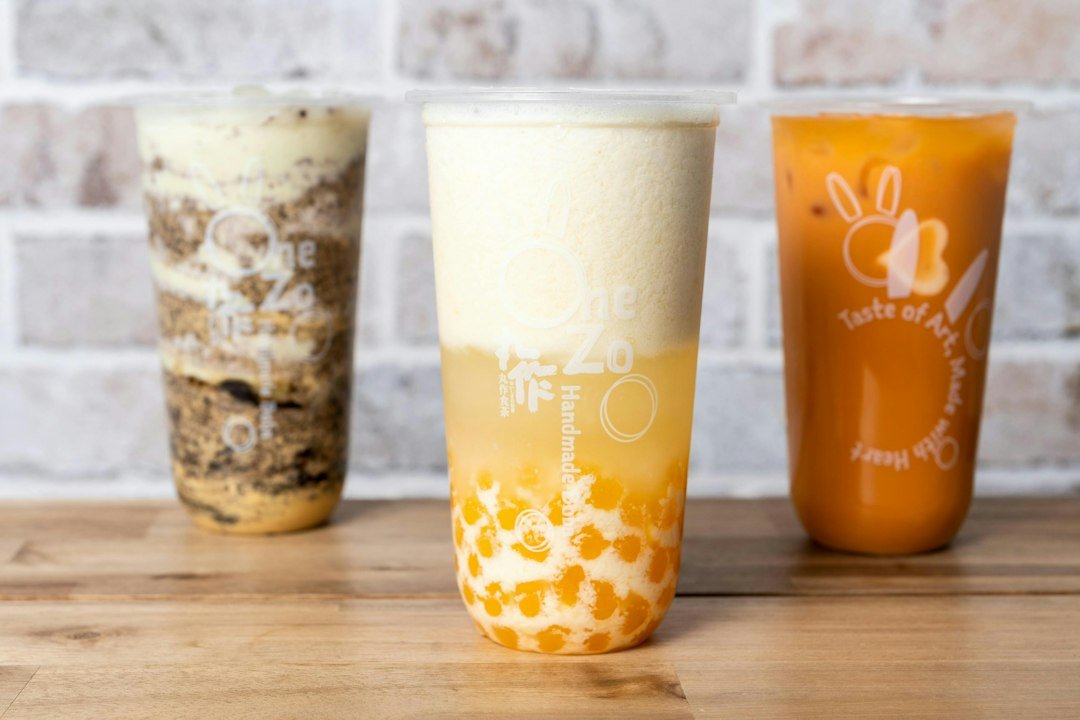
- Bubble tea and flavoured lattes, where both the syrup and the tapioca pearls add sugar.
- Fruit juice, including ‘100% juice’. Juicing removes most of the fibre, and WHO counts juice sugars as free sugars.
- Yoghurt drinks and sports drinks, which are often marketed as healthy but contain added sugar.
- Hangover drinks, many of which are sweetened.
The easiest habit is to read the nutrition panel. In Australia, the ‘per 100 mL’ column makes products easy to compare, and the ‘per serve’ column tells you what you will actually drink.
Easy, Korean-style swaps
- Boricha (roasted barley tea), oksusu-cha (roasted corn tea) or corn silk tea, hot or cold. These are naturally sugar-free and taste satisfying with Korean food. Many families keep a jug in the fridge.
- Sparkling water with a squeeze of citrus instead of soft drink.
- Half-strength yuja-cha: use half a spoon of syrup and top up with hot water and a slice of fresh lemon or ginger.
- Unsweetened soy milk in place of sweetened versions.
- Whole fruit instead of juice. A Korean pear or a mandarin after dinner gives you sweetness with fibre.
- Smaller sizes when you do have a sweet drink, and less sugar when ordering bubble tea.
The bottom line
Liquid sugar reaches the liver fast, and even moderate daily amounts of table sugar or fructose in drinks can double the liver’s fat production within weeks. Cutting sweet drinks is one of the simplest, lowest-cost changes you can make for your liver. Make roasted grain teas, water and whole fruit your everyday drinks, and save sweet drinks for occasional treats.
This article is general information, not medical advice. If you have diabetes or a liver condition, talk to your doctor or an Accredited Practising Dietitian about your diet. See our Medical Disclaimer and Editorial Policy.
Sources
- Geidl-Flueck B, et al. Fructose- and sucrose- but not glucose-sweetened beverages promote hepatic de novo lipogenesis: a randomized controlled trial. Journal of Hepatology. 2021;75(1):46–54.
- University of Zurich. Consumption of added sugar doubles fat production. March 2021.
- World Health Organization. WHO calls on countries to reduce sugars intake among adults and children. March 2015.
- European Association for the Study of the Liver, EASD, EASO. EASL–EASD–EASO Clinical Practice Guidelines on the management of MASLD. Journal of Hepatology. 2024.